
国内权威A期刊论文成果:《口是心非:非言语维度的信息重要吗?—基于投资者电话交流会“信号传递博弈”框架下的实证研究》
闵敏,刘莉亚,陈瑞华(学),赵凡青(学)
《管理科学学报》2023年6月刊,第21卷第8期。
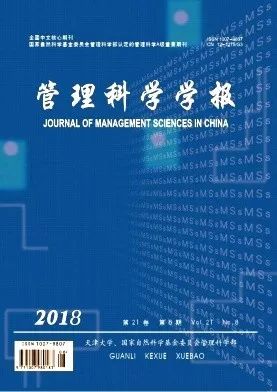
《管理科学学报》是由国家自然科学基金委员会管理科学部主办,天津大学承办,我国管理科学领域具有权威性的一级学术刊物。重点刊载有关管理科学的基础理论、方法与应用等学术性研究成果,以及已取得社会或经济效益的应用性研究成果。

刘莉亚
刘莉亚

闵敏
闵敏
上海财经大学金融学院证券期货系副教授、博士生导师,金融实验室主任。曾在《China Economic Review》、《经济学(季刊)》、《管理科学学报》等权威刊物发表论文多篇。研究领域为金融市场、货币银行、金融工程、金融科技。
心理学研究指出非言语线索在人际交流和信息判断中扮演重要作用,声音情绪作为一种重要的非言语线索,它在资本市场的信息传递中重要吗?这一线索能否帮助投资者判断管理层的“口是心非”呢?基于此,本文首先构建了一个信号传递博弈模型对上市公司自愿信息披露行为进行分析,利用中国上市公司2013-2016年召开和披露的投资者电话交流会音频文件,本文量化了高管的声音情绪,实证检验了高管声音情绪在信号传递博弈框架中扮演的角色。研究发现:(1)“好”公司更倾向于主动召开和披露电话交流会,向市场发送“信号”,但“差”公司也试图混入其中。(2)高管声音情绪含有文本情绪之外的增量信息,能预测公司未来业绩。(3)投资者对高管声音情绪具有非对称反应,对负面情绪反应更强(4)在问答互动环节(Q&A)或公司业绩不达预期时,压力导致高管流露出更多负面情绪。本文研究表明非言语维度的声音情绪具有独特的信息含量,能提高“差”公司发送“虚假信号”的成本,有助于实现“分离均衡”。本文丰富了自愿信息披露的相关研究,并且证明声音情绪在资本市场中有重要作用,也为如何在大数据背景下利用新维度数据在金融领域进行交叉研究提供了有益的参考。
Liu liya,Chen ruihua,Min min,Zhao fanqing
Psychological research points out that nonverbal cues play an important role in interpersonal communication and information judgment. As an important nonverbal clue, does voice sentiment play an important role in information transmission in the capital market? Can this clue help investors judge the management's duplicity? this paper first constructs a signaling game model to analyze the voluntary information disclosure behavior of listed companies. Using the audio data of the earnings conference call held in 2013-2016 by Listed Companies in China, this paper quantifies the voice sentiment of executives, and empirically tests the role of the executives’ voice sentiment in the signaling game framework. The results show that: (1) the good companies are more inclined to hold and disclose the earnings conference call and send signals to the market, but the bad companies also try to mix in (2) voice sentiment contain incremental information beyond tone(text) sentiments, which can predict the future performance of the company. (3) Investors are more sensitive to negative sentiments (4) During the Q&A interaction or under-perform than expectation, the pressure will lead to more negative sentiments released by executives. This study shows that non-verbal voice sentiment has a unique information content, which can improve the cost of false signals sent by poor companies and help to achieve separation equilibrium. This paper enriches the relevant research of voluntary information disclosure, and proves that voice sentiment plays an important role in the capital market. It also provides a useful reference for how to use new dimension data to cross research in the financial field under the background of big data.